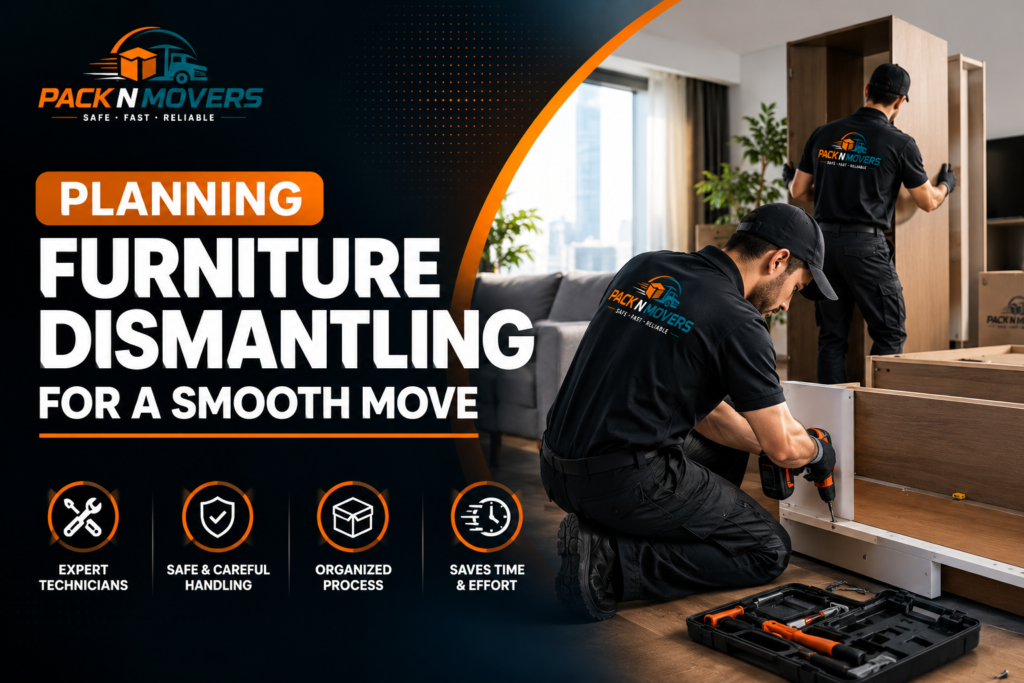
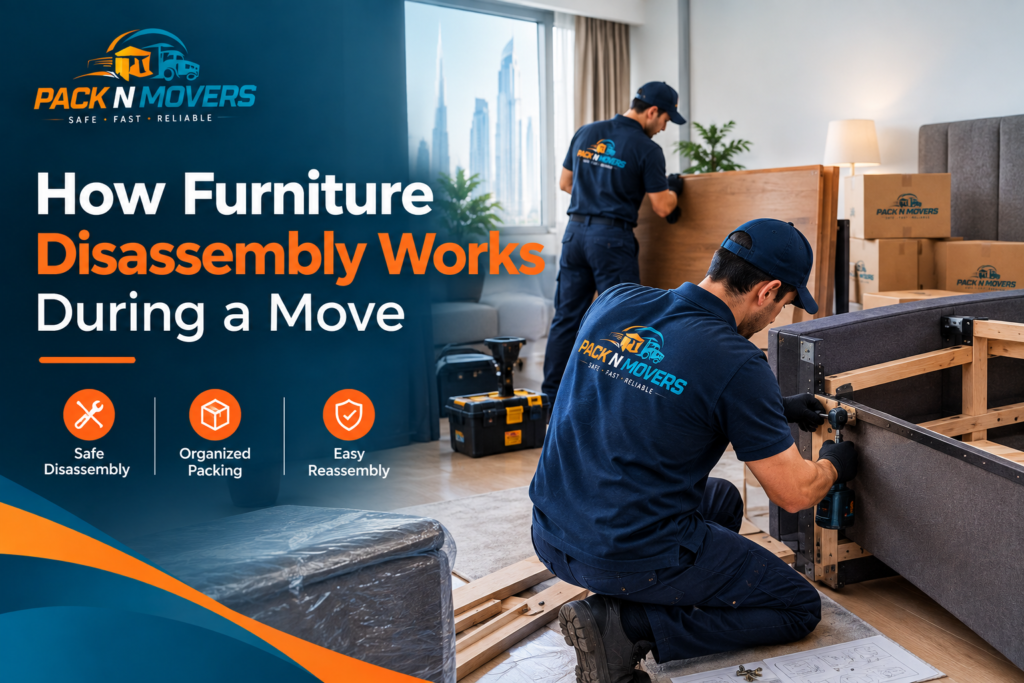
Moving large furniture through a villa doorway, apartment lift, or narrow corridor can become difficult very quickly. Beds, wardrobes, cabinets, desks, and dining tables often cannot pass through an entrance in one piece.
That is where professional dismantling can help. Packnmovers handles furniture-related moving work where items may need to be taken apart before transport and rebuilt at the destination.
Across Dubai, Abu Dhabi, Sharjah, Ajman, Al Ain, Ras Al Khaimah, Fujairah, and Umm Al Quwain, homes and offices have different access conditions. High-rise buildings may have lift limits, villas can have narrow entrances, and older properties may have tight stairways.
Dubai’s population reached about 4.58 million by the end of 2025. Abu Dhabi recorded 4,135,985 residents in 2024. These large residential markets create regular demand for organised moving and furniture handling.
Would your wardrobe fit through the lift as it stands? If not, dismantling it before transport can make the move much simpler.
What furniture disassembly services include
A careful job starts with checking the furniture before any screws or fittings are removed. The technician identifies how the item was built and which parts can be safely separated.
Furniture Disassembly Services can cover beds, wardrobes, cabinets, dining tables, desks, shelving units, TV units, office workstations, and selected modular furniture. The exact scope depends on the construction, fittings, condition, and manufacturer’s design.
Small fittings should be kept with the correct furniture. Screws, brackets, hinges, bolts, dowels, and other hardware can be placed in labelled bags. Panels and shelves should receive simple labels so the correct parts return to the correct item.
Why does this matter? A missing screw can delay reassembly even when every large panel arrives safely.
Professional teams can use drills, screwdrivers, Allen keys, protective blankets, straps, dollies, and other suitable tools. The correct tool reduces unnecessary force and helps protect screws, fittings, and finished surfaces.
Manual handling is another reason to plan the work carefully. OSHA guidance recommends reducing load size and weight where practical, using mechanical aids, and keeping heavy loads within manageable handling conditions.
NIOSH’s lifting equation considers factors such as load weight, distance, twisting, grip, and lifting height. These factors matter when workers handle large wardrobes, bed frames, tables, or cabinet sections.
Types of furniture and service options
Different furniture materials need different handling methods. A solid wood wardrobe may tolerate a different dismantling method from a flat-pack particleboard cabinet.
Flat-pack furniture often has removable panels and standard fittings. It can usually be separated into smaller pieces when the correct assembly method is followed.
Solid wood furniture can be heavier and may use dowels, screws, bolts, or traditional joints. Older furniture needs extra care because fittings may be worn or stuck.
Glass furniture requires another level of handling. Glass shelves, doors, and tabletops should be removed when practical and protected separately during transport.
Office furniture can include desks, workstations, storage cabinets, meeting tables, and modular partitions. Large office moves may require a planned sequence so employees can return to work with minimal disruption.
Furniture that cannot be safely dismantled should not be forced apart. Some glued joints, welded frames, integrated mechanisms, and custom-built pieces are designed to stay together.
| Service option | Suitable furniture | Main benefit | Typical use |
| Basic disassembly | Beds, desks, tables | Easier handling | Local moves |
| Large furniture dismantling | Wardrobes, cabinets | Smaller components | Villas and apartments |
| Office dismantling | Workstations, desks | Organised relocation | Business moves |
| Disassembly and reassembly | Most suitable furniture | Complete relocation support | Home moves |
| Special-item handling | Heavy or fragile pieces | Controlled handling | Custom furniture |
Market listings in the UAE show single-item furniture assembly and dismantling prices starting around AED 150 to AED 349, depending on the provider and scope. These are advertised starting prices, not fixed market rates.
Furniture Installation Services can be added when the same furniture needs rebuilding at the new property. This can be useful when the move involves several wardrobes, beds, cabinets, or office workstations.
How the dismantling and reassembly process works
The first stage is a furniture assessment. The team checks the item, its condition, access route, and the tools needed for the work.
Next, removable parts are taken off in a controlled order. Doors, drawers, shelves, legs, handles, and panels may be removed before the main frame is separated.
Hardware then needs careful organisation. A labelled bag for each furniture item makes later assembly easier. Photos can provide another reference before major components are separated.
Protection follows dismantling. Panels can be wrapped with moving blankets or suitable protective material. Glass, polished surfaces, corners, and finished edges need extra care during loading.
At the destination, the crew checks the available space before rebuilding the furniture. This avoids placing a wardrobe where a door cannot open or a desk where access becomes restricted.
A licensed moving contractor in Dubai would normally assess the load, working space, access route, and required handling equipment before starting a large dismantling job.
For a family moving from a villa in Arabian Ranches to a larger home in Khalifa City, a wardrobe may need to be dismantled before leaving the first property. The panels can then travel safely and be rebuilt in the selected bedroom.
The same approach can help with apartment moves in Dubai Marina, Jumeirah Village Circle, Business Bay, Downtown Dubai, Al Barsha, or Dubai Hills. Lift dimensions and corridor space can affect how furniture should be prepared.
In Sharjah and Ajman, the access route can vary from villa streets to apartment buildings. Al Ain and Ras Al Khaimah can involve larger residential properties with different parking and entrance arrangements.
Fujairah and Umm Al Quwain may involve longer travel distances when furniture is being moved between emirates. The moving plan should account for the complete route rather than focusing only on dismantling.
Furniture disassembly costs in the UAE
Pricing depends on the furniture rather than a single standard rate. A simple bed can require much less work than a large wardrobe with multiple doors, drawers, mirrors, and internal shelves.
The main pricing factors include item size, number of pieces, furniture condition, fitting complexity, number of items, access, floors, lift availability, required tools, and whether reassembly is included.
Some UAE service pages advertise starting prices from AED 150 or AED 199 for basic furniture work, while other furniture installation services advertise starting prices around AED 349. These figures should be treated as advertised starting points rather than universal rates.
A written quotation should state whether dismantling, packing, transport, reassembly, and waste removal are included.
Dubai has specific waste-management rules that matter when old furniture is removed rather than transported. Dubai Municipality provides a bulky-waste service for household furniture and appliances, and Dubai Law No. 18 of 2024 regulates waste disposal within the emirate.
The cost can rise when furniture needs special handling. Large mirrors, marble tables, heavy safes, gym equipment, and custom wardrobes may require extra workers or equipment.
Would it cost less to dismantle one large wardrobe or replace it? The answer depends on its condition, construction, value, and the cost of a replacement.
For an office in Abu Dhabi, dismantling ten workstations may be priced differently from dismantling ten residential wardrobes. Labour time and the sequence of the move can change the total.
How to choose a furniture service provider
Start by asking for an itemised quote. The provider should know what furniture needs dismantling and whether reassembly is required.
Send clear photographs when possible. Photos can help the technician identify furniture type, approximate size, fittings, mirrors, drawers, and possible access issues before the appointment.
Ask how the team labels hardware. Screws and fittings should stay connected to their matching furniture instead of being placed into one mixed container.
Check whether the quote includes protection. Finished wood, glass, marble, mirrors, and polished surfaces can suffer scratches if they are moved without suitable covering.
You should ask whether the same crew can handle dismantling, transport, and reassembly. A single coordinated team can reduce the risk of parts being separated between different stages.
For large moves, ask about insurance and damage procedures. Keep valuable documents, jewellery, cash, and other personal valuables separate from furniture being transported.
Companies like Packnmovers can be considered when you need furniture dismantling as part of a wider residential or office relocation. A specialist furniture team can assess the item, organise fittings, protect components, and plan reassembly around the destination space.
The provider should explain what cannot be dismantled safely. A responsible technician should not force glued, damaged, welded, or structurally weak furniture apart.
What should you check before booking? Confirm the item list, service scope, price, access conditions, packing requirements, reassembly terms, and any possible extra charges.
For UAE-wide work, confirm the exact service area too. A company may cover Dubai and Abu Dhabi but have different schedules for Sharjah, Ajman, Al Ain, Ras Al Khaimah, Fujairah, or Umm Al Quwain.
Conclusion
Good furniture preparation can make a difficult move much easier. Large wardrobes, beds, cabinets, desks, and tables may need to be separated before they can pass through doors, lifts, stairways, or narrow corridors.
Before booking, identify every item that needs dismantling and ask for a written scope. Check whether hardware labelling, protection, transport, and reassembly are included. For larger UAE moves, confirm access at both properties and share furniture photographs in advance. If you need help planning the work, Packnmovers can assess your furniture requirements and explain the suitable service. Clear preparation can reduce delays and make the final setup simpler.
FAQs
How much do Furniture Disassembly Services cost in Dubai?
Basic furniture dismantling may start from around AED 150 to AED 199 based on advertised UAE service prices. Large wardrobes, multiple items, difficult access, packing, transport, and reassembly can increase the total. Ask for an itemised quote based on your furniture list and property access.
What do Furniture Disassembly Services include in Abu Dhabi?
The work can include dismantling beds, wardrobes, desks, cabinets, tables, and other suitable furniture. Hardware is normally organised for later assembly. The final scope depends on furniture design, condition, access, and whether transport or reassembly forms part of the booking.
Are furniture dismantling services available in Sharjah and Ajman?
Yes, furniture dismantling and assembly providers advertise services across major UAE locations, including Sharjah and Ajman. Availability can differ by provider and appointment date. Share furniture photographs, the property location, floor details, and lift information when requesting a quotation.
Do I need permission to remove old furniture in Dubai?
Old furniture should not simply be abandoned in public areas or placed where waste disposal rules prohibit it. Dubai Municipality provides a bulky-waste service for household furniture and appliances. Building or community management may have separate collection procedures, so confirm the approved disposal method before removal.
Can furniture withstand UAE heat after disassembly and storage?
Furniture condition depends on its material, finish, packaging, and storage environment. Wood, laminated boards, adhesives, fabrics, and leather can react differently to heat and humidity. Keep dismantled components protected from direct sun and damp areas, especially during longer storage or inter-emirate transport.