
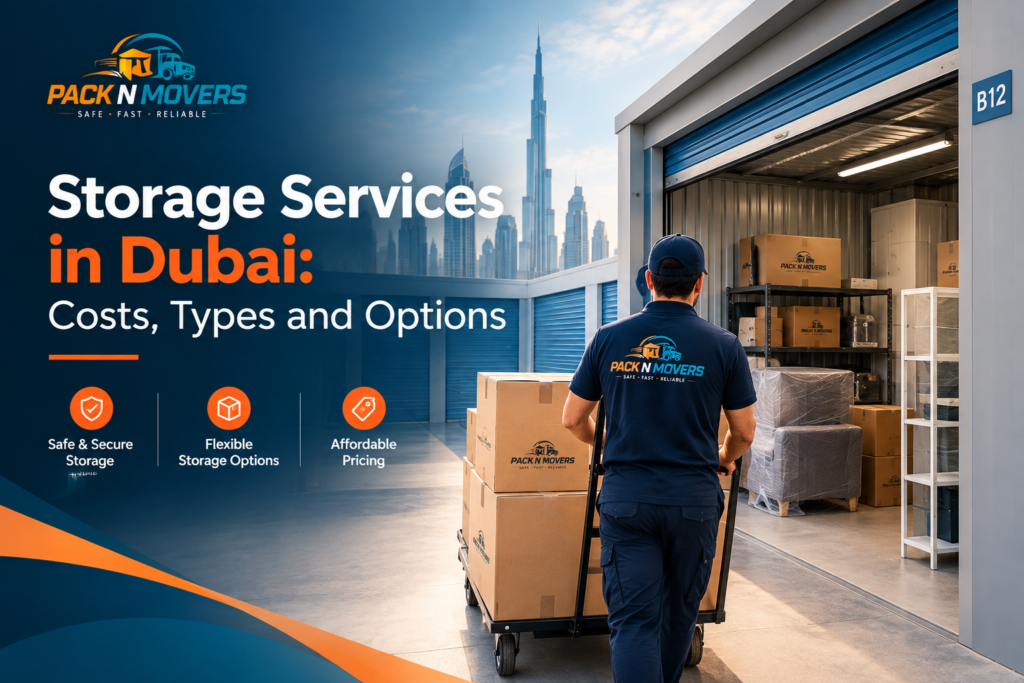
Moving between homes, renovating a villa, leaving Dubai for several months, or storing business stock can create a simple question: where should everything go?
The right storage setup depends on the volume of your belongings, how long you need the space, and how often you need access. Climate control can matter for furniture, electronics, documents, artwork, and other sensitive items.
Packnmovers provides moving and storage support for Dubai residents who need space without keeping unused items at home. A managed storage service can include collection, packing, transport, inventory, storage, and return delivery.
So, what type of storage fits your situation? Do you need a private unit, warehouse space, or a managed collection service? And how much should you budget?
Current Dubai storage prices vary widely. Published 2026 rates range from about AED 150 for very small spaces to AED 3,800 or more for larger units.
Storage options for Dubai homes and businesses
Your storage needs become easier to plan once you separate the space type from the service level. A few boxes need a different solution from a complete three-bedroom home.
Self-storage gives you a dedicated unit and direct access. This can suit people who need to visit their belongings often. Current Dubai listings show units from small lockers through spaces of 200 square feet or more.
Managed storage works differently. The provider collects your belongings, records them, stores them, and brings them back when requested. This can reduce the need to hire a van or move heavy furniture yourself.
Warehouse storage suits larger volumes, business inventory, furniture, equipment, or items that need more floor space. Access rules can vary, so ask how quickly you can retrieve individual items.
Climate-controlled storage can make sense for sensitive goods. Dubai’s heat and humidity can affect wood, leather, paper, electronics, and some fabrics. A controlled facility can reduce exposure to large temperature and humidity changes.
What should you store for a few months? Seasonal furniture, household items during renovation, spare office equipment, archived documents, and business stock can all fit different storage plans.
For longer periods, Long Term Storage in Dubai can reduce the effective monthly cost when providers give discounts for three-, six-, or twelve-month commitments. Current Dubai storage providers publish both monthly and longer-term rates.
Comparing storage types, access, and monthly cost
The price you see online does not always represent the complete cost. Packing, collection, delivery, VAT, insurance, access arrangements, and climate control can change the final amount.
For example, one current Dubai provider lists storage from AED 500 per month, with packing and transport charged separately. Another published price list shows a 50-square-foot unit at AED 895 monthly and a 100-square-foot unit at AED 1,545, before VAT.
| Storage option | Typical monthly range | Best for | Access |
| Small locker | AED 150–450 | Boxes, luggage, documents | Limited |
| 50 sq ft unit | AED 500–1,400 | Small apartment items | Scheduled or direct |
| 100 sq ft unit | AED 1,000–2,000+ | One to two bedrooms | Scheduled or direct |
| 150+ sq ft unit | AED 1,600–3,800+ | Large homes, stock | Provider dependent |
| Managed storage | From about AED 500+ | Homes and businesses | Provider arranged |
These figures are planning ranges rather than fixed Dubai tariffs. Current published prices show major differences between providers and unit formats.
If you search for Storage Services near me in Dubai check whether the quote covers only floor space or a complete storage service. If you need Long Term Storage in Dubai, ask whether the provider gives a lower effective rate for a longer contract.
How the storage process works
A good storage process starts with a clear inventory. We first identify what needs to be stored, estimate the required space, and separate fragile or sensitive goods from standard household items.
The next step is packing. Furniture may need protective wrapping, while smaller items can go into labelled cartons. Electronics, artwork, documents, and delicate materials may need different protection.
Collection comes next. A moving team loads the items and records what enters storage. Photo inventories can help you keep track of furniture, boxes, appliances, and other stored goods.
The storage facility then places the goods in the agreed space. Ask about CCTV, controlled entry, pest control, ventilation, fire protection, insurance, and temperature or humidity management.
UAE good storage practices published by the Ministry of Health and Prevention state that suitable storage areas should remain dry, with relative humidity not above 60% and temperatures within an acceptable 8–25°C range for the covered storage context. The guidance also says goods should remain off the floor and have enough space for cleaning and inspection.
That guidance is particularly useful when storing sensitive goods. A household furniture facility may have different specifications, so ask the provider what environmental controls actually apply to your unit.
When you need your items back, the provider schedules collection or return delivery. Some managed services can return selected items rather than the entire stored load.
Dubai storage costs and safety requirements
Storage prices depend on more than square footage. Unit size is the obvious factor, but contract duration, location, access, climate control, collection, delivery, packing, and insurance can change the final figure.
Current published Dubai pricing gives useful planning bands. A 50-square-foot unit may cost around AED 500–1,400 per month, while 100 square feet can range from about AED 1,000 to AED 2,000 or more. Larger spaces can reach several thousand dirhams monthly.
Location matters too. Published 2026 comparisons show lower planning ranges in areas such as Dubai Investments Park, with Al Quoz and more central service areas sometimes costing more depending on the facility and access model. These figures vary by provider and should not be treated as fixed district rates.
Longer contracts may reduce the effective monthly rate. SpaceVault, for example, publishes one-year pricing alongside monthly and shorter-term plans, making the total commitment easier to compare.
Safety requirements deserve attention when you store commercial goods. Dubai Civil Defence guidance covers warehouse fire protection and requires storage projects to provide information about the materials stored and the storage method during relevant submissions.
For hazardous materials, requirements can become more specific. Dubai Civil Defence states that hazardous-material warehouses require approval after document review and inspection based on the type of material being stored.
What does this mean for normal household storage? You should still ask what the facility permits. Paints, chemicals, fuel, gas cylinders, certain batteries, and other hazardous goods may need separate arrangements.
Choosing a local storage provider
Start with the items rather than the advertised unit size. A provider should ask about furniture, appliances, cartons, fragile goods, business stock, and the length of storage.
Then check the full quote. Does it include a collection? Is packing separate? Is VAT included? What happens when you need an item returned? These questions can prevent a low monthly price from becoming a much larger final bill.
Access is another point to check. A self-storage unit may suit you if you need regular visits. Managed storage can make more sense if you want the provider to handle collection and return.
Climate control deserves attention for sensitive items. Ask for the actual temperature and humidity range instead of accepting a general claim that the facility is climate controlled.
Insurance terms should be clear too. Find out whether cover is included, optional, or excluded. One current Dubai provider states that property cover is not automatically included, which shows why this question belongs in the initial quote.
Companies such as Packnmovers can be considered when you want moving and storage handled as one process. A storage specialist can coordinate collection, packing, transport, storage, and return arrangements instead of leaving you to organise separate suppliers.
For a local comparison, ask each provider the same questions. What space do you recommend? What is included in the monthly fee? What are the collection charges? How is access handled? What protection is used for furniture?
A realistic Dubai example is a family moving from a larger apartment into a smaller home. Instead of paying for a larger property simply to keep spare furniture, they could store selected beds, cabinets, and seasonal items. The right unit size may reduce their monthly housing costs while keeping those belongings available.
Conclusion
Choosing storage starts with knowing what you need to keep, how long you need it, and how often you need access.
A small locker may suit documents and boxes. A larger climate-controlled unit can work better for furniture and sensitive belongings. Managed storage can reduce the physical work involved in collection and return.
Before booking, compare the complete price, storage conditions, access rules, insurance, and contract period. If you need help planning collection and storage together, contact Packnmovers and ask for a clear quote based on your actual items and storage period. A simple inventory can make the decision much easier.
FAQs
How much do Storage Services near me in Dubai cost?
Dubai storage can range from about AED 150 for very small spaces to AED 3,800 or more for larger units. A 50-square-foot unit may cost around AED 500–1,400 monthly, depending on location, access, climate control, and contract terms.
What is the cost of Long Term Storage in Dubai?
Long-term storage can reduce the effective monthly rate when providers give discounts for three-, six-, or twelve-month plans. Published Dubai rates show examples from roughly AED 360 monthly for 30 square feet and AED 1,200 for 100 square feet.
Which storage size is suitable for a Dubai apartment?
A 50-square-foot unit may suit a lightly furnished one-bedroom home, while around 100 square feet can suit larger apartment contents. The actual space depends on furniture size, dismantling, packing method, and how tightly items can be arranged.
Are there storage safety requirements in Dubai?
Yes. Dubai Civil Defence requirements cover warehouse fire and life safety. Relevant storage projects can require information about stored materials and storage methods, while hazardous-material facilities face additional approval and inspection requirements.
Is climate-controlled storage useful in Dubai’s climate?
It can help protect sensitive furniture, paper, electronics, leather, and other goods from heat and humidity. UAE good-storage guidance specifies controlled conditions for covered storage uses, including humidity of no more than 60% and temperatures of 8–25°C.